Here comes the (sun) screen!




Summer is close! While sunscreen may seem like an easy health decision, many people, especially younger and health-conscious ones, have questions. Sunscreen health advice and rumors are everywhere, and we’re seeing this reflected in national surveys: 1 in 7 younger adults think daily sunscreen use is more harmful than direct sun exposure.
So what’s going on with sunscreen? I called Dr. Michelle Wong, an Australian chemist, to help highlight the scientific nuance in sunscreen discussions.
Here’s what we know about sunscreen, what we don’t know, and what it may (or may not) mean for you.
Is sunscreen effective against skin cancer?
Nuance is needed, but yes.
Mechanistically, sunscreen makes sense. UV exposure is the main cause of skin cancers, especially in lighter skin tones, and sunscreens reduce the UV that reaches the skin. In laboratory studies, sunscreen reduces DNA lesionsthat accumulate over time and eventually lead to cancer.
When we look at “real-world” studies among humans, though, there is mixed evidence of sunscreen’s effectiveness against cancer. Two meta-analyses that pooled all these studies found no effect. However, this is hard to measure as most people apply less sunscreen than is recommended.
If we pull out the most rigorous studies (randomized controlled trials, or RCTs) that followed people over a long period of time, there is a positive effect:
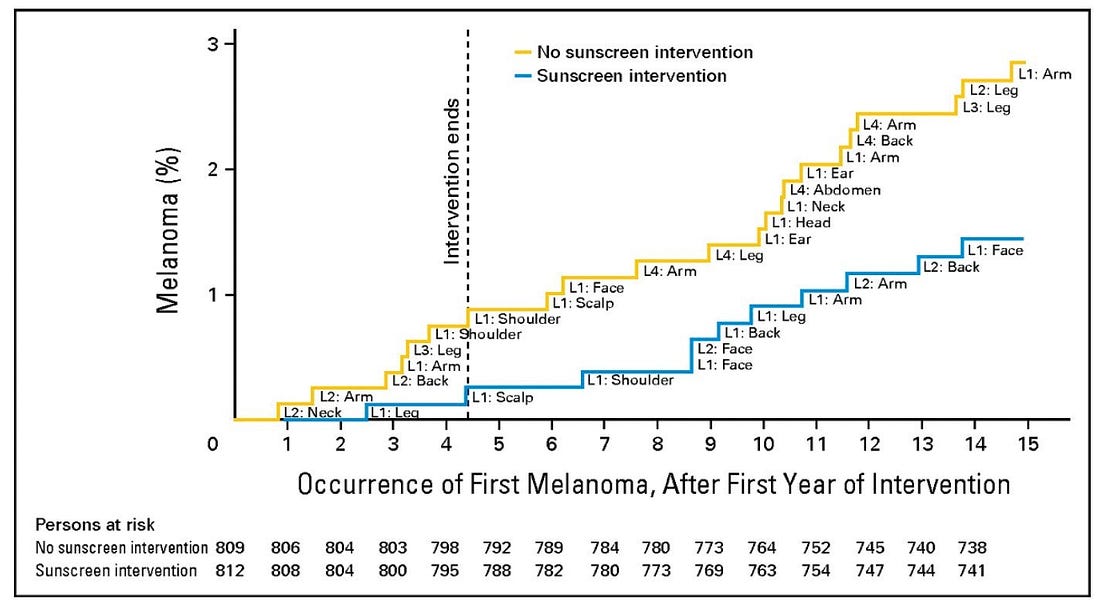
- A long-term Australian RCT (15+ years) found daily sunscreen use reduced squamous cell carcinoma by 40% and roughly halved new cases of melanoma a decade later. No reduction was seen in basal cell carcinomas. However, the limited number of melanomas makes this finding less clear.
 |
- RCTs have also found that sunscreen use reduces pre-cancerous spots (actinic keratoses) and moles in children (a risk factor for melanoma later in life).
Is sunscreen effective against photoaging?
This is a clear yes. Evidence from many studies across diverse populations, including a large RCT, shows that sunscreen prevents signs of photoaging, such as wrinkles and pigmentation.
But DIY sunscreens don’t work well
The chance of you consistently getting sunscreen in your home kitchen is… not great. Scientists estimated the highest SPF achieved in DIY SPF is 6.
DIY sunscreens don’t work for two reasons:
-
Sunscreen developers use special grades of zinc oxide with very small particles, which absorb more UV. These powders are also often coated to improve dispersion, while DIY recipes usually specify “uncoated” powders.
-
Even with the right ingredients and equipment, sunscreen formulators must optimize the formula extensively to achieve consistently high SPF—sunscreens are considered one of the hardest products to create!
What about the risks to the environment, like reefs?
“Reef safe” is a marketing term; there is no official standard behind it.
The term arose from a deeply flawed 2015 study, which led to public pressure that resulted in bans on specific sunscreen ingredients, usually oxybenzone and octinoxate, in some places, such as Hawaii.
But, there’s no good evidence that sunscreen harms coral, except in laboratory experiments where coral is exposed to unrealistically high concentrations. In 2022, the National Academies convened many leading environmental scientists to review evidence on sunscreen’s environmental impacts and compile it into a 400-page report. They confirmed what leading coral scientists stated when the original 2015 study was published: the impacts of sunscreens pale in comparison to far more significant stressors, like warming weather.
Why does the U.S. have fewer sunscreen ingredients than other countries?
Long story short: animal testing.
Sunscreens are one of the most scrutinized products we put on our skin— they’re regulated as drugs in some regions (the U.S., Canada, Australia), and a special category of cosmetics in others (European Union, Japan, Korea).
Historically, getting a new sunscreen approved by the FDA required large-animal studies that include hundreds of animals and over a year of testing to assess actual tumor development.
In other regions like the EU and Australia, a broader range of evidence could be considered for ingredient approval, including smaller, shorter animal studies, in vitro testing, and “real-world” population data.
Since sunscreens are cosmetics in many parts of the world, their ingredients fell under cosmetic animal testing bans. These took effect before the FDA pathway tests could be conducted for the newer sunscreen ingredients, so U.S. approval was never pursued. This has led to a bustling gray market for imported sunscreens containing newer active ingredients—these can provide high protection while allowing for more lightweight, elegant textures. They’re also designed to be inherently safer and less allergenic, with structures that absorb even less through skin. (More on this below.)
The good news: in the U.S., H.R. 5371 passed in late 2025, enabling the FDA to consider broader evidence, such as historical safety data and non-animal testing methods, when evaluating the safety of sunscreen ingredients.In the coming months, bemotrizinol (bis-ethylhexyloxyphenol methoxyphenyl triazine, or BEMT) may be the first new sunscreen ingredient approved since 1999. It’s one of the most popular “chemical” sunscreen actives used outside of the U.S., providing broad protection against both UVB and UVA.
Hopefully, other sunscreen ingredients will follow!
What about ingredient safety?
Differing regulations around the world have also led to confusion around sunscreen safety.
While there are two types of sunscreen, most questions are about “chemical” sunscreens due to FDA whiplash.
Note: Chemical sunscreens (e.g., oxybenzone, avobenzone, octinoxate) are carbon-based and are usually dissolved in the sunscreen formula, while mineral sunscreens (zinc oxide, titanium dioxide) are inorganic and found as solid particles. Both types of sunscreen largely work by sitting on the skin's surface, where they absorb UV radiation and convert it into heat.
For a long time, the FDA’s official stance was that the amounts of “chemical” sunscreens absorbed into the bloodstream were too low to pose serious health risks (defined as a carcinogenic risk greater than 1 in 100,000 after a single dose). They were thus considered safe by default, and detailed safety studies weren’t required. However, new FDA studies in 2019 and 2020 found that blood levels were actually higher than previously thought.
Importantly, this didn’t mean sunscreens were unsafe, but the FDA has requested more data to confirm their safety. Originally, this meant that new large-scale animal studies would be needed, which would jeopardize the use of these ingredients in countries with bans on animal testing. The recent passage of H.R. 5371 allows the FDA to use alternative studies to confirm safety, bringing sunscreen regulation more in line with other regions (the exact details should be issued soon). While in this regulatory limbo, these sunscreen ingredients remain on the U.S. market.
Although this may sound scary, sunscreen safety assessments from other parts of the world are reassuring. The EU and Australia draw on a broader evidence base, and because studies from the 1990s had already flagged blood absorption of chemical sunscreens, that was factored into their safety assessments long ago. And, every ingredient commonly used in U.S. sunscreens has been reassessed in the EU or Australia within the past six years. All were deemed safe.
Why not just use mineral sunscreen?
For those who prefer the feel of mineral sunscreens or are sensitive to particular chemical sunscreens, these can be a great option. And given the seemingly uncertain risks associated with chemical sunscreens, mineral sunscreen may seem like a safer, more appealing alternative.
However, with mineral sunscreens, keep in mind a few things, too:
- Unscrupulous marketing. Australia’s TGA has recently warned that campaigns promoting zinc-based sunscreens “often present incomplete and alarmist narratives about sunscreen ingredients.”
- Feel and appearance: When applied properly, mineral sunscreens appear white on the skin and tend to feel heavier than chemical sunscreens.
- Underapplied: The heaviness and white cast mean they tend to be underapplied. This results in far lower protection and a higher likelihood of sunburn.
- “Hidden” boosters: Due to these drawbacks, there are often hidden “SPF boosters” in mineral sunscreens. These are modified versions of chemical sunscreens, but do not need to be listed as active ingredients and do not undergo the same approval or quality control processes. Although they are likely still very safe, they can be difficult for people with sunscreen allergies to spot.
- Mineral sunscreens are inherently less stable. The particles are much denser than the other ingredients, which means they tend to clump and settle, and small changes in the recipe can throw off the whole product. A recent example: the 2025 Australian sunscreen scandal, in which some zinc oxide sunscreens turned out to provide far less protection than labeled, triggering widespread recalls and a major overhaul of sunscreen regulations.
So what do we do?
The health policy holds strong: sunscreen’s known benefits outweigh the unclear risks, and there are pros and cons to both types of sunscreen actives. Ultimately, the best sunscreen is the one that you will use a lot, regularly.
Overall, keep in mind:
- There are far more similarities than differences between chemical and mineral sunscreens in terms of effectiveness and safety. The main differences are aesthetic.
- “Broad-spectrum” sunscreen is best. The SPF rating on American sunscreen bottles primarily indicates a sunscreen’s ability to block UVB rays, the most damaging type. Some sunscreens in the U.S. don’t cover UVA rays well. Sunscreens labeled “broad spectrum” have a better UVA/UVB protection balance.
- Adequate application is key. The reliability of SPF testing has been in the spotlight recently, with some regions proposing scrapping specific SPF numbers altogether. While SPF 30 will always let in twice as much UV as SPF 50, the differences become much smaller with adequate application: for an adult, aim for one teaspoon for each limb, one for the front of your body, one for your back, and one for your head.
- Vitamin D can still reach the skin. High SPF sunscreens are designed to filter out UVB rays, the exact type of rays needed to produce Vitamin D in our bodies. However, sunscreen doesn’t block all of these rays, and its application is uneven because humans are humans. Unless you are very diligent with daily sunscreen application, including in winter, it’s unlikely that sunscreen will affect your vitamin D status. We also get Vitamin D from food sources.
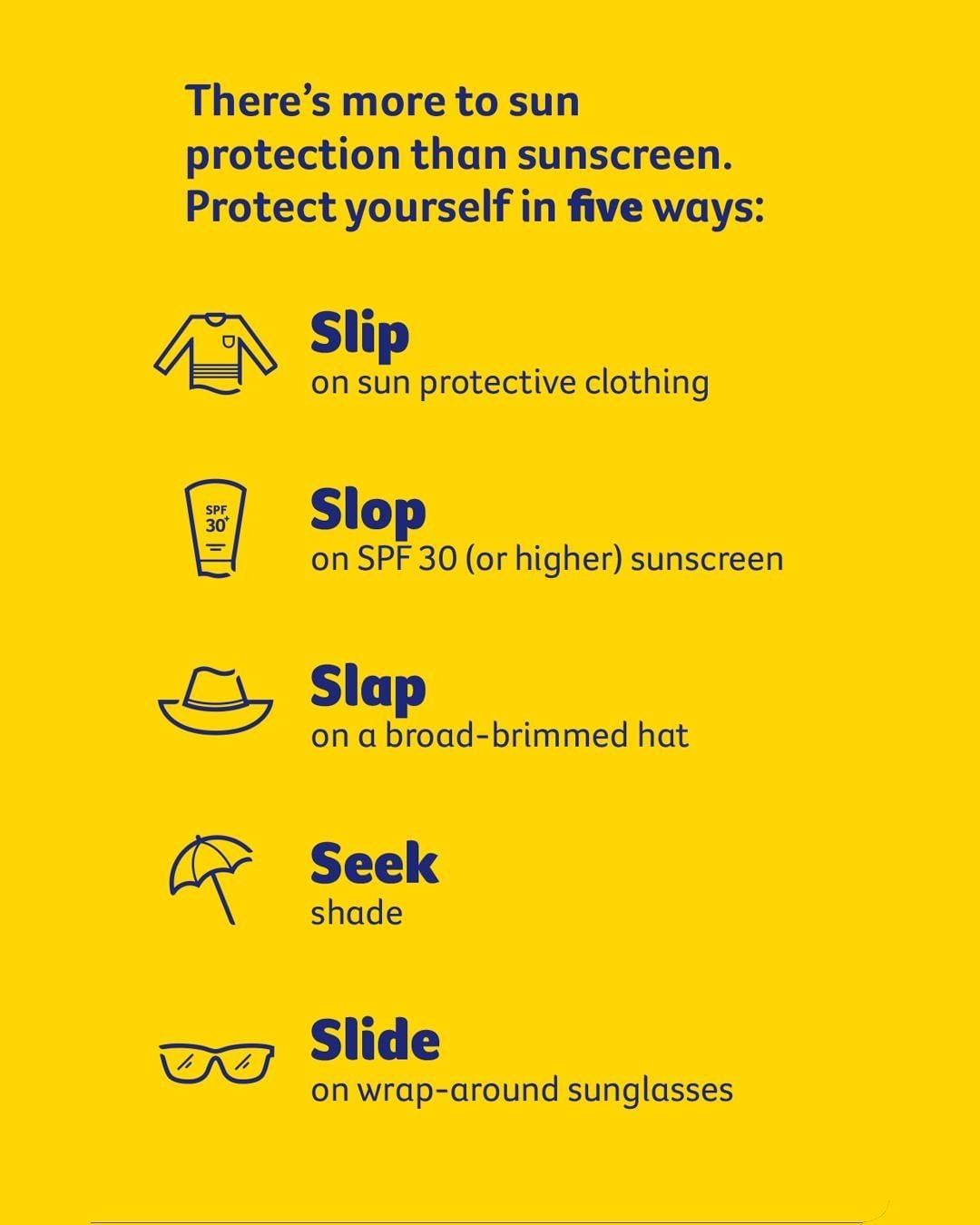
For sun protection, layers are the name of the game. Sunscreen should be thought of as your last line of defense against the sun.
 |
Bottom line
Sunscreen can help fight skin cancer and prevent photoaging. The nuances can feel paralyzing, but ultimately, the best type of sunscreen is one that you will use a lot of, regularly.
Slip, slop, and slap.
Love, YLE and MW
Dr. Michelle Wong is an Australian chemist and fellow science educator who addresses the top sunscreen rumors circulating widely these days.
Your Local Epidemiologist (YLE) comprises a team of experts, ranging from physicians to immunologists to epidemiologists to nutritionists, working together with one goal: to “Translate” ever-evolving public health science so that people are well-equipped to make evidence-based decisions. YLE suite of newsletters reaches over 475,000 people across more than 132 countries. This newsletter is free to everyone, thanks to the generous support of fellow YLE community members.